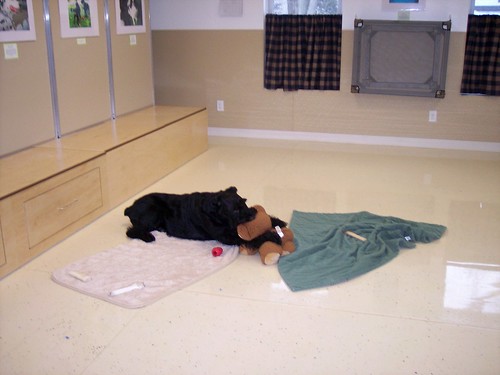
Having a well-trained dog can provide your home with a happy balance. You both understand what is expected out of each other. Once your dog is trained, you’ll feel more comfortable leaving him inside the house alone, having visitors over with him around and taking him with you out in public. It might not have been an easy road, but you will soon know that the time you spent on training your dog will have been worth it.
For the best results in training your pet, you must be diligent about giving rewards and encouragement. Giving your dog treats at the right time and in the right amount is important. This is because a dog does not always understand what it is being rewarded for if they do not receive their treat at the right time.
Give your puppy something it can chew to help it lessen teething pains, like a toy or a piece of rope. Keep any items you treasure out of reach of your puppy while it is teething. Give it an actual chew toy in its place. A wet frozen washcloth is great for a puppy, who has teething pain, to chew on.
As you start training your dog, establish verbal cues that let your dog understand when they have performed something correctly. One good word can act as an appreciated segue from the good behavior to the ultimate reward.
Have frequent or as necessary mini-training sessions to reinforce and keep the rules fresh in your dog’s mind. Many times, owners feel that since their animals have gone through dog training, they can just forget about it. You can encourage your dog to adopt good habits. For this reason, it is especially important to hold your dog to a strict disciplinary system.
You should keep doggy treats handy for rewarding your dog. You want to teach your pooch that good behavior is beneficial. By rewarding your dog after it does something you want, it will realize that it’s doing a good thing. Therefore, it will be more likely to continue this good behavior.
As you encounter unfamiliar dogs, make certain to advance with care and let the dog smell your hand. He’ll learn your scent and begin to have trust. As you become close to one another, fear will be diminished and opportunities to learn together will be increased.
Every day, try to allow your pet to have an hour or so of exercise. This is on top of regular training lessons and restroom breaks. When your dog is worn out, his behavior will be better. A dog who has received plenty of exercise is happier and more responsive.
If your dog’s barking is driving you nuts, you might try acclimating the animal to whatever stimuli is causing the undesirable excitement. It may be a noise, or seeing other animals or people. Eventually, your dog should see that barking is not necessary in this situation.
Wearing out a puppy with too much training and information, will be extremely counterproductive. Puppies have short attention spans and don’t focus well, so make sure to keep your training sessions short, but as positive as you can. A training session that wears your puppy out is going to turn into an unpleasant memory, making him less likely to respond well to subsequent sessions, and more inclined to ignore what you are trying to teach him.
Puppy training centers around the establishment of rules. Once the rules have been set, your dog, and you, will find the relationship even more worthwhile! Remember to keep reinforcing what your dog has learned. Do not let him stray from good behavior over time, and stay firm if he does. Once your dog knows the basics, his ability to do anything is near limitless.