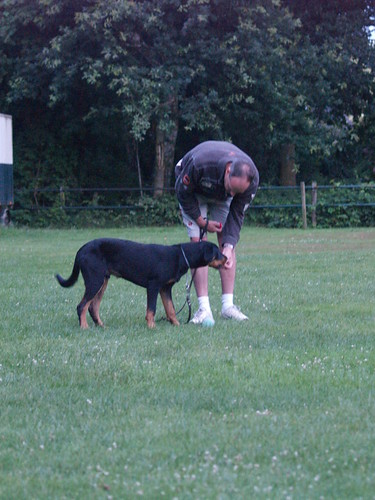
Cool beans! Training should begin immediately after you have gotten home with your new pet. Investing the time in proper training will help you and your dog forge a much better relationship. The following tips will tell you what you need to know for effectively training your pooch.
Make sure that you use a gradual process when training your dog. Start with a short session and gradually add more time to it. Notice when your dog begins getting distracted during a training session.
Always remain consistent when crate training any young pups. When you allow the puppy to come out of the crate, you have to immediately and without fail give him the chance to relieve his bladder. This will teach your dog that he can wait until he gets out of the crate to relieve himself.
When giving commands to your body, your tone and volume level should remain the same. Your tone conveys seriousness to the dog and the fact that they must obey you. Additionally, it distances discipline commands from normal commands.
When it’s time to introduce house training to your dog, put him on a consistent schedule of eating and elimination. Then you will be aware when your dog needs to go outside to use the bathroom. Using this schedule can teach your dog how to hold their piddle until the upcoming potty break.
You need to teach your puppy how to leave an item alone with a simple command such as “leave it.” It ensures they don’t eat food they shouldn’t, chew on items not intended to be chewed on or even pick up dangerous or poisonous items in their mouth.
If your dog is jumping on you, grab his paws with your hands and gently squeeze them to deter his behavior. If done lightly, it won’t hurt the dog, but it’ll make them uncomfortable. This will help them to stop this action immediately.
Call for your dog the same way every time. First, say his name, then the command. First, call his name then give him a verbal or gesture command. Dogs often respond to their name immediately and know you intend for them to pay attention.
To prevent your dog from barking, try to desensitize them to the cause of their barking. First, determine what it is that causes your dog to bark- a knock on the door, someone walking by the car, or other cause. Your dog will eventually learn not to react in these situations.
Ensure you frequently put your dog in social environments at an early age. They need to become aware of how they should act around other people and dogs. They can’t learn about it otherwise. It will help your dog adjust to new environments better, also.
Have some patience when dealing with your dog. Your dog is not human and doesn’t know English. The dog can only understand simple gestures and vocal tones but won’t understand your meaning. Stay calm, step back and take a breather when you become frustrated.
Your dog should be challenged regularly. Provide your dog with fun ways to “quiz” it in order to ensure that it hasn’t lost past training.
Don’t allow your dog to drag you around. Remember that you are the master, not him. Use a short leash and keep your dog close to your side, pulling it back when it begins to lead and telling it to heel. The dog should always remember that you’re the captain!
Crib Mattress
Make sure that your dog has enough sleeping space, especially when the dog is a big one that likes to sprawl. Large, rectangular beds are readily available, or you can purchase a crib mattress. A crib mattress is convenient because you can use a fitted crib sheet as a cover, which can be changed very easily and as frequently as you desire. This is also good because mattresses for cribs are waterproof.
Training success means scheduling training every single day consistently. Consistency and repetition are the keys to learning. Your dog will trust and love you if you spend some time with it every day. You will be the alpha in the pack.
Use good quality treats when training your dog for best results. Even cheese or lunch meat can be a great motivator.
Be sure to take your dog to the vet annually for vaccinations and a physical exam. If you see your dog struggling or regressing with his training, ascertain that he is healthy. Many times a dog can be in pain without you knowing it. So many times behavioral changes are the only clue that there is a health issue. For example, aggression can be a sign of pain, and sudden regression in-house training can signal a urinary tract infection.
Whenever you introduce new animals to your home, make sure you do it slowly. Before you even consider adopting a new pet, think about the one you have at home. You can boost bonding efforts by getting a new pet that has a complimentary personality to your own.
Keep your emotions from other areas, such as a fight with a friend or family member or being upset with another pet, at bay. You want to avoid using a cold tone that your dog can sense. If your dog has not misbehaved, you should treat him warmly.
Trained dogs are the happiest dogs, and they keep their masters happy too. These tips can give you the info you will need to get on the right track to train your dog.